What Happens If You Miss an HMRC Deadline? (And How to Avoid It)
Missing a deadline happens.
But when it comes to HMRC, even a small delay can lead to penalties, interest, and unnecessary stress. What often starts as a minor oversight can quickly turn into something more time-consuming—and more expensive—than expected.
The good news is that most missed deadlines are both avoidable and manageable, especially if you act early.
What Actually Happens When a Deadline Is Missed
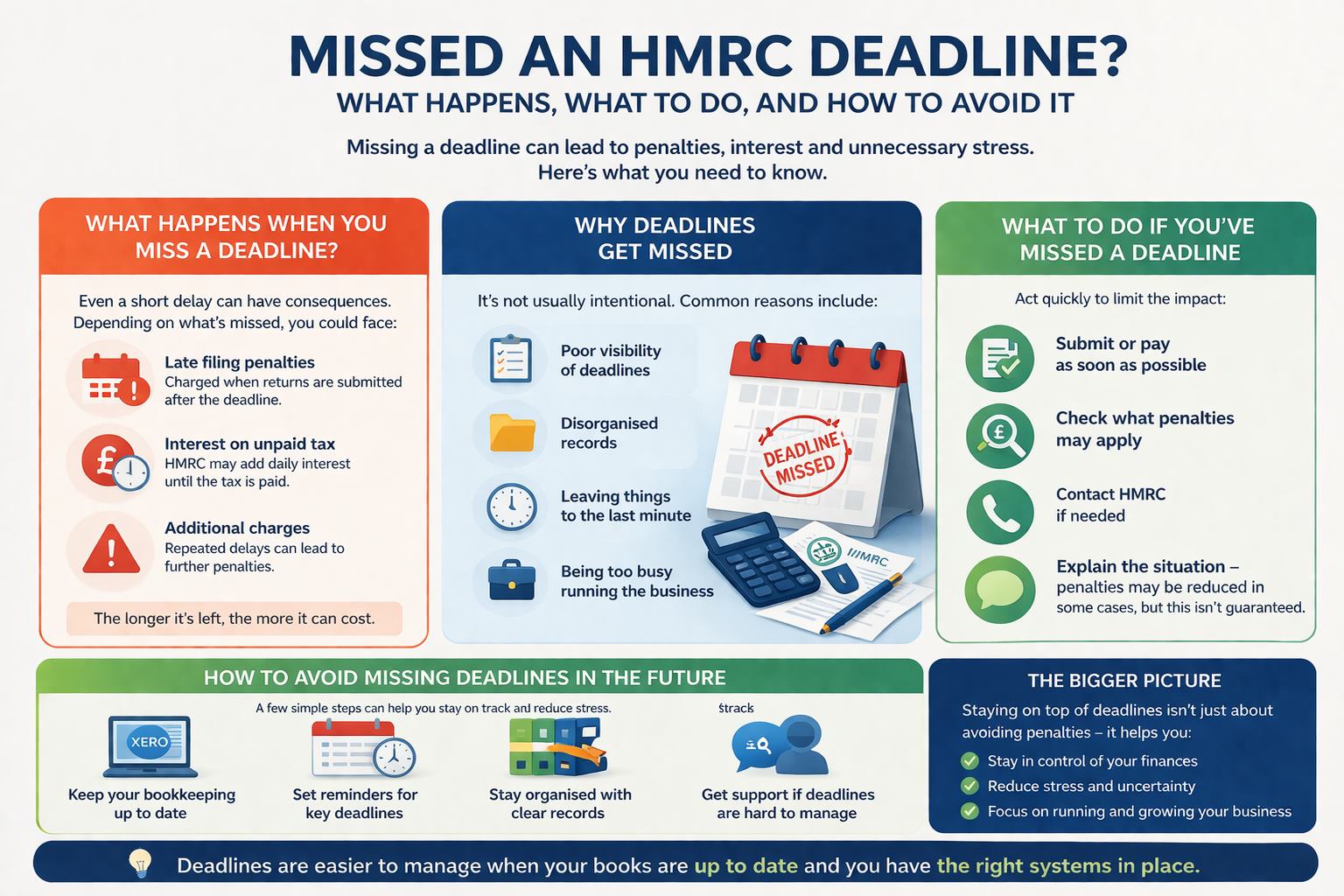
When a deadline is missed, HMRC doesn’t usually jump straight to severe penalties—but there are consequences.
In many cases, businesses will face an initial late filing penalty, followed by additional charges if the issue isn’t resolved. Interest can also be applied to any unpaid tax, which means the longer it’s left, the more it costs.
The exact outcome depends on the type of deadline. For example, missing a VAT return carries different implications compared to missing a Self Assessment or PAYE deadline.
If you want to see how penalties are structured, HMRC provides guidance here:
👉 https://www.gov.uk/penalties-for-late-self-assessment-tax-returns
Why Deadlines Get Missed in the First Place
In most cases, it’s not a lack of intent—it’s a lack of visibility.
When bookkeeping isn’t up to date, it becomes much harder to see what’s due and when. Deadlines can creep up unexpectedly, especially when you’re focused on running and growing your business.
There’s also a tendency to leave things until the last minute, particularly when records need tidying up before submission. Combine that with a busy schedule, and it’s easy for something to slip through the cracks.
Over time, this creates a reactive pattern—dealing with deadlines only when they become urgent.
The Knock-On Effects (Beyond Penalties)
The financial penalties are one part of the picture—but they’re not the only impact.
Missing deadlines can disrupt your cash flow, especially if unexpected payments or penalties arise. It can also create stress and uncertainty, particularly if you’re unsure what’s been missed or what needs to be done next.
Perhaps most importantly, it takes your focus away from running your business. Time that could be spent on clients, growth, or planning ends up being spent resolving avoidable issues.
What to Do If You’ve Already Missed a Deadline
If a deadline has already been missed, the most important thing is to act quickly.
Submitting the required information or making payment as soon as possible will usually limit the impact. The longer it’s left, the more likely additional penalties or interest will apply.
In some situations, HMRC may consider reducing or cancelling a penalty if you have a reasonable excuse. Their guidance on this is available here:
👉 https://www.gov.uk/tax-appeals
However, this isn’t guaranteed—so it’s always better to deal with the issue promptly.
How to Avoid It Happening Again
Avoiding missed deadlines is less about working harder—and more about having the right systems in place.
When your bookkeeping is kept up to date, deadlines become much more visible. You’re not scrambling to pull information together at the last minute, and submissions become a routine part of running your business rather than a stressful event.
Simple steps like setting reminders, working to a consistent monthly process, and keeping records organised can make a significant difference.
For many businesses, bringing in support also helps ensure that deadlines are tracked and met consistently—removing the risk of things being overlooked.
The Bigger Picture
HMRC deadlines aren’t just administrative tasks—they’re part of the financial rhythm of your business.
When they’re managed well, everything runs more smoothly. There’s less stress, fewer surprises, and more time to focus on what actually matters.
When they’re missed, even occasionally, it can create a cycle of disruption that’s difficult to break.
Key Takeaways
Missing an HMRC deadline isn’t the end of the world—but it’s something worth taking seriously.
The real value comes from putting systems in place that mean deadlines are no longer something you have to think about—they just happen as part of a well-run process.
If deadlines feel difficult to manage—or you’re worried something may have been missed—it may be time to put a more structured approach in place.
Disclaimer
The information in this article is for general guidance only and does not constitute financial, tax, or legal advice. While we aim to keep content accurate and up to date, rules and regulations can change and individual circumstances vary.
You should always seek advice from a qualified accountant or professional adviser regarding your specific situation before making any decisions.