UK minimum wage rises again: what you need to know from April 2026
Millions of workers across the UK have seen their pay packets change this week as the Government’s latest increase to the National Living Wage (NLW) and National Minimum Wage (NMW) took effect on 1 April 2026.
The rise follows recommendations by the independent Low Pay Commission, which advises the government each year on how the statutory wage floor should change.
Here’s everything you need to know about the increases — from bigger pay packets for younger workers to what employers must do now.
What’s changed? The new minimum wage rates
As of 1 April 2026, the UK’s statutory minimum rates of pay have gone up for the first pay reference period starting on or after that date.
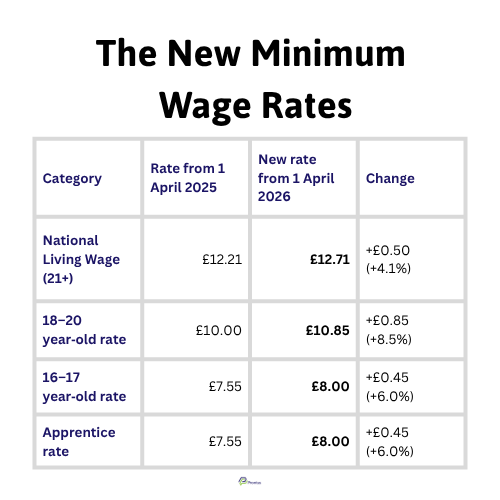
For example, a 21‑year‑old working full‑time at the new rate will now earn at least £12.71 per hour, up from £12.21 last year.
Who qualifies?
The rates apply to workers and employees across the UK — including part‑time and zero‑hours contracts — provided they meet the legal definition of an employee or worker.
National Living Wage: applies to all workers aged 21 and over.
National Minimum Wage: applies to younger workers — with age bands at 18–20, 16–17, and a separate apprentice rate.
Accommodation offset (a daily allowance employers can count towards NMW for provided lodging) also rose slightly to £11.10 per day.
If an employer fails to pay the correct rate, they could face penalties from HM Revenue & Customs (HMRC) and be publicly named.
What this means for workers
For many, the wage rise will be a noticeable boost to income:
A full‑time worker aged 21+ on the NLW may see hundreds more per year in take‑home pay.
The biggest percentage increase was for 18‑ to 20‑year‑olds, whose rate jumped by 8.5 %.
Employers must now update payrolls to reflect the new rates — otherwise staff may not be being paid legally.
However, campaigners have pointed out that even these higher statutory rates lag behind what independent bodies like the Real Living Wage say is needed for a decent standard of living.
How employers are reacting
While workers welcome the extra cash, many businesses — particularly in sectors heavily reliant on hourly staff such as hospitality and retail — say rising labour costs are creating challenges:
Some firms warn they may need to raise prices, cut roles, or reduce hours to cover rising pay bills.
Others are budgeting carefully to absorb the changes without passing costs on to customers.
At the same time, the Government has said the increases are designed to help people on low incomes keep up with average wage growth and ease cost‑of‑living pressures.
When you’ll see the change
The new rates apply from the first pay reference period on or after 1 April 2026 — in practice, this means that many workers will see the change reflected on pay slips in April or May.
Employers should check their payroll systems before processing this month’s payslips to ensure compliance.
🧠 Final thoughts: is it enough?
The annual minimum wage rise is now well‑established as a standard part of the UK’s employment landscape, with the Low Pay Commission’s recommendations typically adopted by the Government.
This latest increase adds another pay bump for millions of workers — but debate continues over whether statutory minimum rates go far enough to reflect the real costs of living, especially outside London where the voluntary Real Living Wage is already higher.