Why Most Small Businesses Misunderstand Cash Flow (And How to Fix It)
Cash flow is one of those terms that gets used a lot—but not always clearly understood.
Many small business owners assume that if they’re making a profit, everything must be fine. But in reality, profit and cash flow are not the same thing.
And misunderstanding that difference is one of the most common reasons businesses run into trouble.
What Is Cash Flow (and Why Does It Matter)?
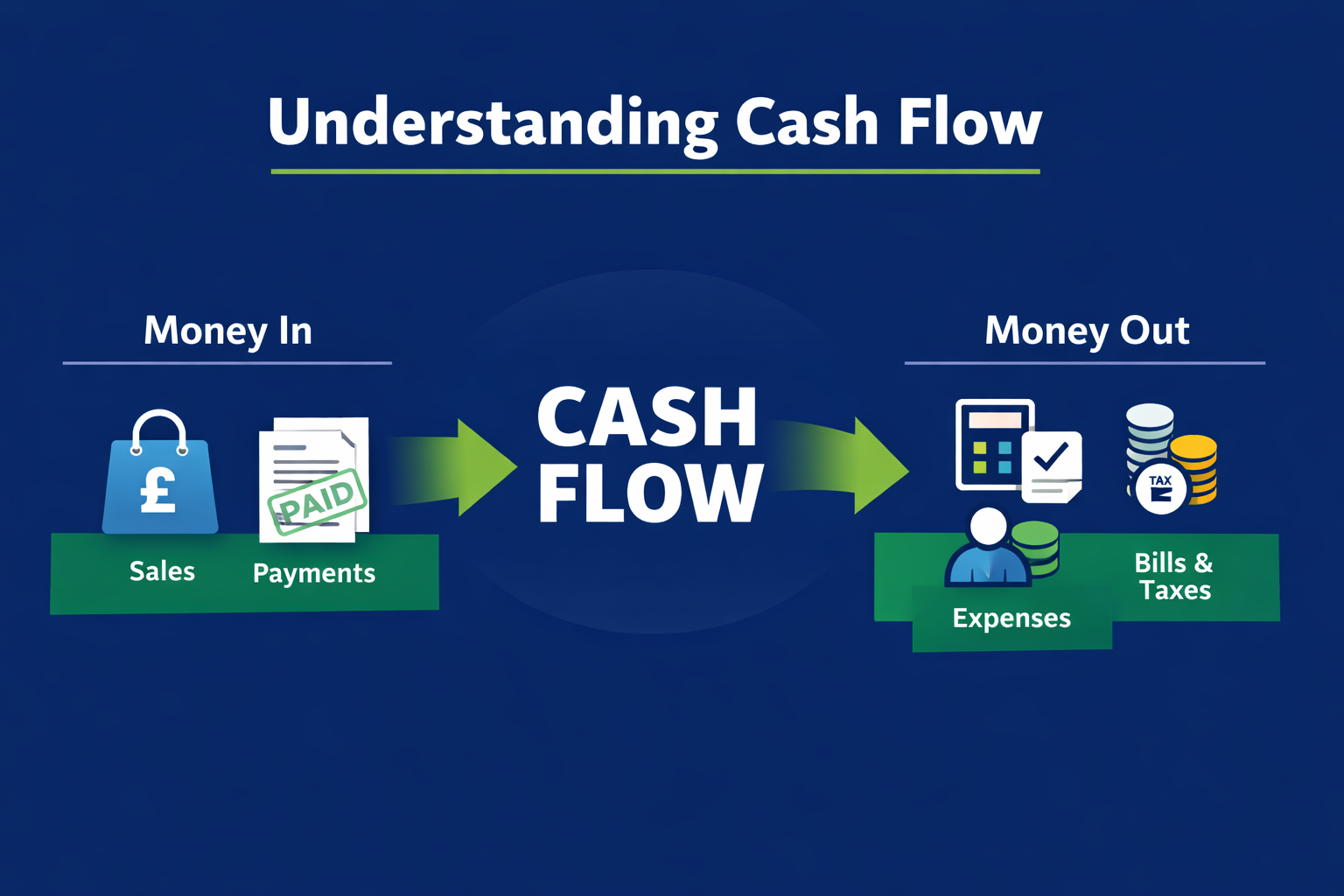
Put simply, cash flow is the movement of money in and out of your business.
Money coming in → from sales, payments, and income
Money going out → expenses, wages, tax, and suppliers
It sounds straightforward—but this is where things become critical.
A business can be profitable on paper, but still struggle if cash isn’t available when it’s needed.
Cash flow matters because it directly affects your ability to:
Pay staff and suppliers on time
Cover VAT and tax bills
Invest in growth
Keep your business running day to day
Without healthy cash flow, even a successful business can quickly run into difficulties.
Profit Doesn’t Equal Cash in the Bank
On paper, your business might look healthy. You’ve invoiced clients, sales are coming in, and everything seems to be moving in the right direction.
But this is where things can become misleading.
You might have issued invoices that haven’t been paid yet, or have large expenses due before money comes in. It’s also common for VAT or tax bills to land at times that don’t align neatly with your income. Even when your business is profitable overall, these timing gaps can leave you short on available cash.
That’s because profit is what you’ve earned—cash flow is what you actually have available.
Timing Is Everything
Cash flow problems are often about timing, not performance.
You might:
Pay suppliers before clients pay you
Experience seasonal dips in income
Take on work that delays incoming cash
Even a growing, profitable business can struggle if money isn’t coming in at the right time.
Why This Catches So Many Businesses Out
Most small businesses don’t start with detailed financial systems in place.
Instead, it’s common to:
Check the bank balance and assume everything is fine
Focus on sales rather than payment timing
Deal with issues only when they arise
The problem is, by the time cash flow becomes obvious—it’s often already causing issues.
How to Get Back in Control of Your Cash Flow
The good news is that cash flow is something you can manage—once you start paying attention to it properly.
1. Know What’s Coming In (and When)
Keep track of:
Outstanding invoices
Expected payment dates
Regular income patterns
Clarity here makes a huge difference.
2. Understand What’s Going Out
List your key outgoings:
Payroll
Supplier payments
VAT and tax deadlines
This helps you avoid surprises—and plan ahead.
3. Don’t Rely on Your Bank Balance Alone
Your bank balance is a snapshot, not the full picture.
What matters is:
What’s about to leave your account
What hasn’t arrived yet
4. Build a Buffer Where You Can
Even a small buffer can make a big difference.
It gives you breathing room when:
Payments are delayed
Unexpected costs come up
5. Get Support If You Need It
Cash flow becomes much easier to manage when your numbers are up to date and clearly organised.
Having the right support in place helps you:
Spot issues earlier
Plan with confidence
Avoid last-minute stress
Key Takeaways
Cash flow isn’t just a finance term—it’s what keeps your business running day to day.
Understanding the difference between profit and cash flow, and how money actually moves through your business, is one of the most important steps you can take as a business owner.
If your numbers feel unclear or you’re relying on your bank balance to guide decisions, it may be time to take a closer look at your cash flow.
Disclaimer
The information in this article is for general guidance only and does not constitute financial, tax, or legal advice. While we aim to keep content accurate and up to date, rules and regulations can change and individual circumstances vary.
You should always seek advice from a qualified accountant or professional adviser regarding your specific situation before making any decisions.