Allowable Expenses Explained: What UK Businesses Can (and Can’t) Claim
Understanding what counts as an allowable expense can make a real difference to your business.
Claim too little, and you could end up paying more tax than necessary. Claim incorrectly, and you risk problems with HMRC.
The key is knowing what’s allowed—and what isn’t.
What Are Allowable Expenses?
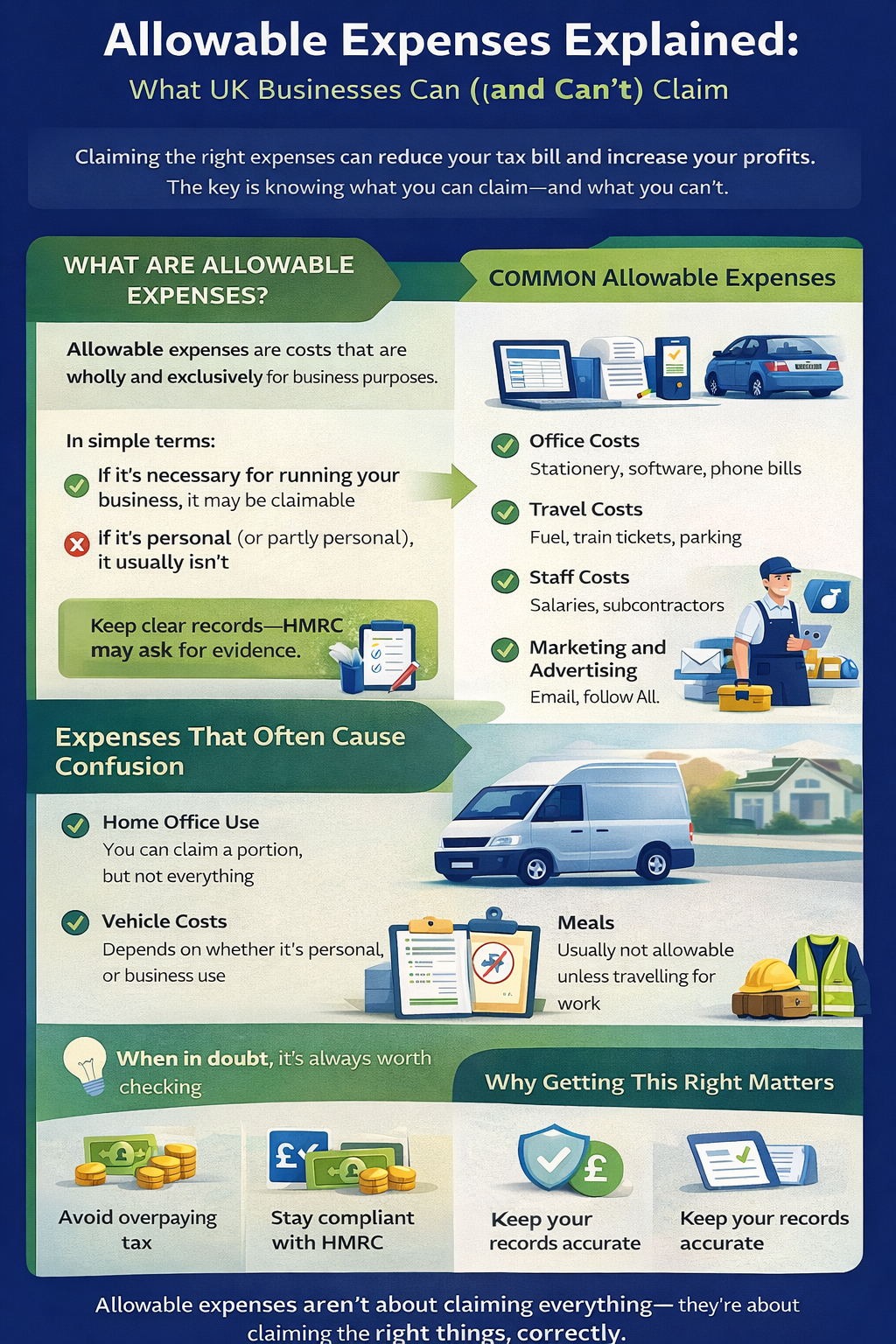
Allowable expenses are costs that are wholly and exclusively for business purposes.
In simple terms:
👉 If it’s necessary for running your business, it may be claimable
👉 If it’s personal (or partly personal), it usually isn’t
Common Allowable Expenses
Here are some of the most common expenses UK businesses can typically claim:
Office costs (stationery, software, phone bills)
Travel costs (fuel, train tickets, parking)
Staff costs (salaries, subcontractors)
Marketing and advertising
Professional fees (accountants, legal support)
Keeping clear records is essential—HMRC may ask for evidence.
Expenses That Often Cause Confusion
Some areas aren’t always straightforward:
Home office use → You can claim a portion, but not everything
Vehicle costs → Depends on whether it’s personal or business use
Meals → Usually not allowable unless travelling for work
Clothing → Only specific items (e.g. uniforms, PPE)
When in doubt, it’s always worth checking.
Why Getting This Right Matters
Understanding allowable expenses helps you:
Avoid overpaying tax
Stay compliant with HMRC
Keep your records accurate
It also gives you a clearer picture of your actual business costs.
Key Takeaways
Allowable expenses aren’t about claiming everything—they’re about claiming the right things, correctly.
Good record-keeping and a clear understanding of the rules make all the difference.
If you’re unsure what you can claim, getting tailored advice can help you stay compliant while making the most of what’s available.
Disclaimer
The information in this article is for general guidance only and does not constitute financial, tax, or legal advice. While we aim to keep content accurate and up to date, rules and regulations can change and individual circumstances vary.
You should always seek advice from a qualified accountant or professional adviser regarding your specific situation before making any decisions.