Making Tax Digital for Income Tax: Are You Ready?
Making Tax Digital (MTD) is HMRC’s long-term plan to modernise the UK tax system. For many landlords and self-employed individuals, MTD for Income Tax Self Assessment (ITSA) will bring big changes in how income and expenses are recorded, reported, and submitted to HMRC.
The earlier you prepare, the smoother the transition will be — and the fewer last-minute headaches you’ll face.
What Is Making Tax Digital for Income Tax?
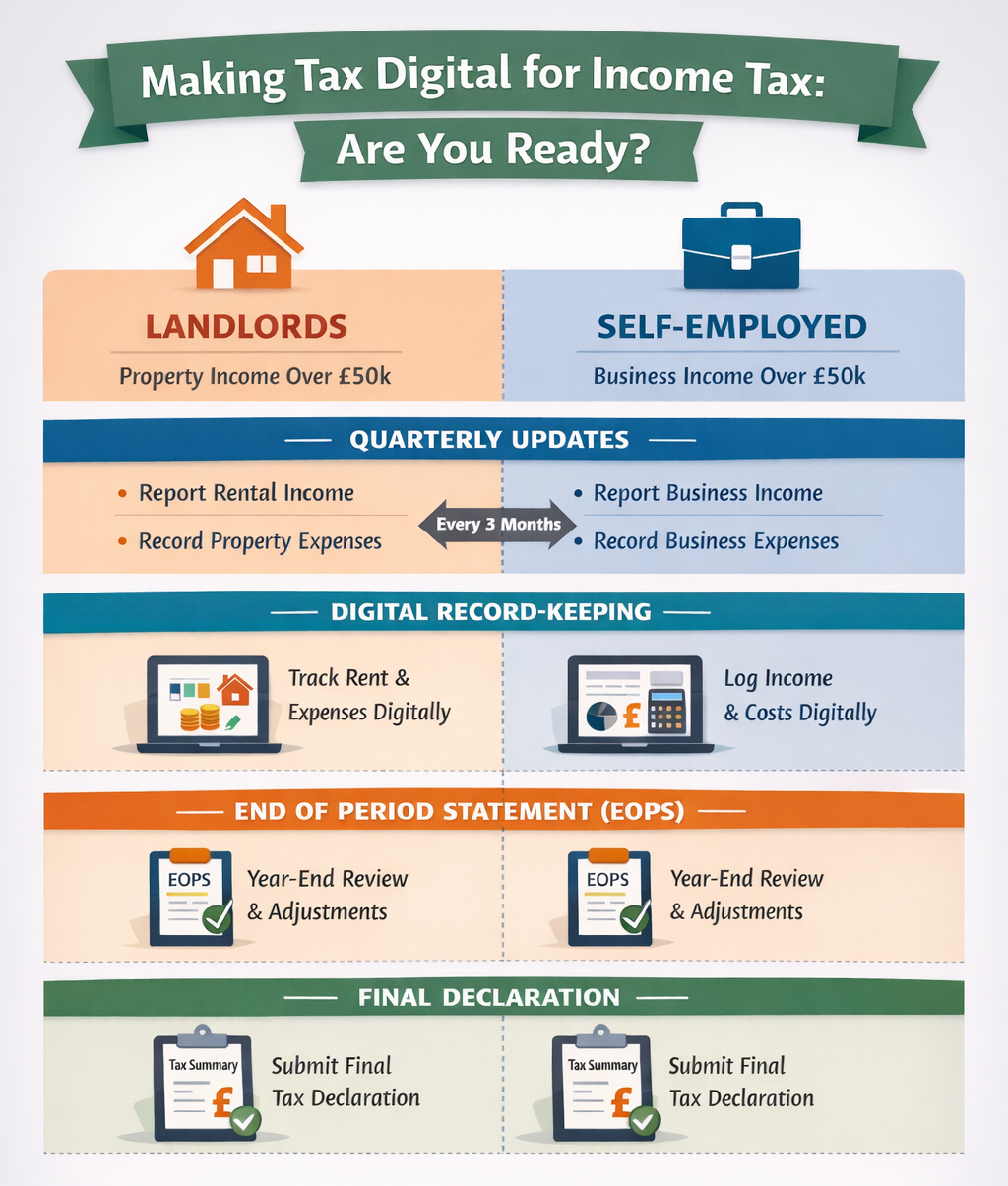
MTD for ITSA moves the UK from an annual paper-based tax return to digital record-keeping and quarterly reporting. Instead of submitting a Self Assessment once a year, individuals will need to:
Keep digital records of income and expenses
Submit quarterly updates to HMRC
Complete an End of Period Statement (EOPS)
Make a Final Declaration to confirm the year’s tax liability
The goal is to make tax reporting more accurate and timely, helping individuals manage their tax affairs throughout the year rather than in one stressful rush at year-end.
Who Will MTD Affect?
MTD currently applies to:
Self-employed individuals with annual income over £50,000
Landlords with annual property income over £50,000
HMRC plans to lower the threshold to £30,000 in the near future, so more people will be affected over time.
Important: Even if you’re under the threshold now, preparing early can make the transition smoother.
How MTD Impacts Self-Employed Individuals
If you run a business as a sole trader or a partnership, MTD will change how you report your income and expenses:
Key Changes:
Quarterly Updates
You’ll submit income and expense updates every three months rather than waiting for the year-end Self Assessment.Digital Record-Keeping
All your business income, expenses, and allowances must be recorded digitally using MTD-compatible software.End of Period Statement
At the end of the tax year, you’ll review and confirm all quarterly updates in an End of Period Statement.
Benefits:
Improved visibility of your tax position throughout the year
Early detection of mistakes or missing expenses
Smoother year-end reporting
Common Challenges:
Adapting to digital software if you’ve used spreadsheets or paper records
Learning what counts as allowable expenses
Staying consistent with quarterly reporting
How MTD Impacts Landlords
For landlords, MTD focuses primarily on rental income and property-related expenses.
Key Changes:
Quarterly Updates
You’ll need to report rental income, allowable property expenses, and any other income from property each quarter.Digital Record-Keeping
Keep digital records of rent received, repairs, maintenance, mortgage interest, and other deductible expenses.End of Period Statement
At the end of the tax year, you confirm the total taxable income via an End of Period Statement.
Benefits:
Clearer picture of rental profit throughout the year
Avoiding year-end surprises like unexpected tax bills
Easier to plan cash flow for multiple properties
Common Challenges:
Tracking multiple properties and expenses digitally
Understanding which expenses are allowable under HMRC rules
Adjusting to quarterly reporting rather than annual filing
Preparing for MTD: Practical Steps
Whether you’re a landlord or self-employed, preparation is key. Here’s a checklist:
1. Digitise Your Records
Move income and expense tracking into MTD-compatible software.
Ensure records are complete, accurate, and up-to-date.
2. Select the Right Software
Look for platforms that support both quarterly updates and End of Period Statements.
Consider software tailored to landlords or self-employed businesses for ease of use.
3. Understand Deadlines
Quarterly updates will be required every three months, not just once a year.
Missing deadlines can lead to penalties, so plan your reporting schedule carefully.
4. Seek Professional Support
A tax advisor or payroll specialist can help you set up systems, check records, and submit updates accurately.
Professional guidance reduces the risk of errors and makes compliance simpler.
How Prontus Can Help
At Prontus, we help both landlords and self-employed clients navigate MTD with confidence. We can:
Set up digital record-keeping systems
Ensure software is MTD-compliant
Handle quarterly updates and year-end declarations
Provide ongoing advice to make tax reporting straightforward
Our goal is to make MTD stress-free, so you can focus on running your business or managing your property portfolio.
Are You Ready for MTD?
Making Tax Digital is more than just a compliance requirement — it’s an opportunity to take control of your finances and plan ahead.
Whether you’re self-employed or a landlord, starting early gives you peace of mind and avoids last-minute headaches.
Get in touch with the Prontus team today to make sure your records, software, and reporting are ready for MTD.